Explore our central library of data sheets, product guides, process manuals, brochures, and case studies — all designed to help engineers and buyers work with Hexcel materials confidently.
data sheets
Select a product category below to find the appropriate product data sheet for your needs.
The Future of Composites in Wind, Hydrogen Applications: CW Trending Episode 5A
Composites World interview with Hexcel’s Claude Despierres discusses current and future demands for composite materials, especially carbon fiber, in the wind energy industry, as well as supply, cost and performance of these materials in the hydrogen storage market
Hybrid Steel Composite Specimen Manufacturing with HexPly® M77
Hybrid Steel Composite Specimen Manufacturing with HexPly® M77. An abridged version of Daniel Sommer’s presentation at SICOMP. For the full presentation contact dsommer@ifb.uni-stuttgart.de
Thoughts, ideas, and concepts from Hexcel leaders on the business of advanced composites and the markets we serve
Unmanned Aerial Vehicles (UAVs)
HexPly® XF Surfacing Technology Enabling High-Quality Paint-Ready Surfaces for Prepreg and Infused Components
Carbon Fiber – The Key Building Block of Advanced Composites
Urban Air Mobility
Creating a Customer-Focused Innovative Culture
Advanced Air Mobility Race and Composite Materials
Meeting the High-Temperature Material Challenges of Hypersonic Flight Systems
Propelling the Future of Flight with Hexcel Composites
Emerging Markets Will Demand High-Rate Production Systems for Advanced Composites
Propelling the Future of Space and Defense
Archer Aviation Plans to Work With Hexcel to Advance Production Capabilities
Hexcel Advanced Composites are Propelling the Future of Renewable Energy
Propelling the Future of High Performance Sports
Propelling the Future of Automotive
Glossary of Composites Terms
Here are the definitions for some of the industry terms we use within our business.
Adhesive
A thermoset resin (e.g., epoxy, phenolic or BMI) in the form of a thin film or paste, cured under heat and pressure to bond a wide range of composite, metallic and honeycomb surfaces.
Aramid
A high strength, high stiffness fiber derived from polymid. Kevlar(tm) and Nomex(tm) are examples of aramids.
Carbon Fiber
Fiber produced by carbonizing precursor fibers based on PAN (polyacrylonitrile), rayon or pitch. The term is often used interchangeably with graphite. However, carbon fibers and graphite fibers are made and heat treated at different temperatures and have different carbon contents.
Composite Material
Product made by combining two or more dissimilar materials such as fibers and resins to create a product with exceptional structural properties not present in the original materials.
Cowls or Cowling
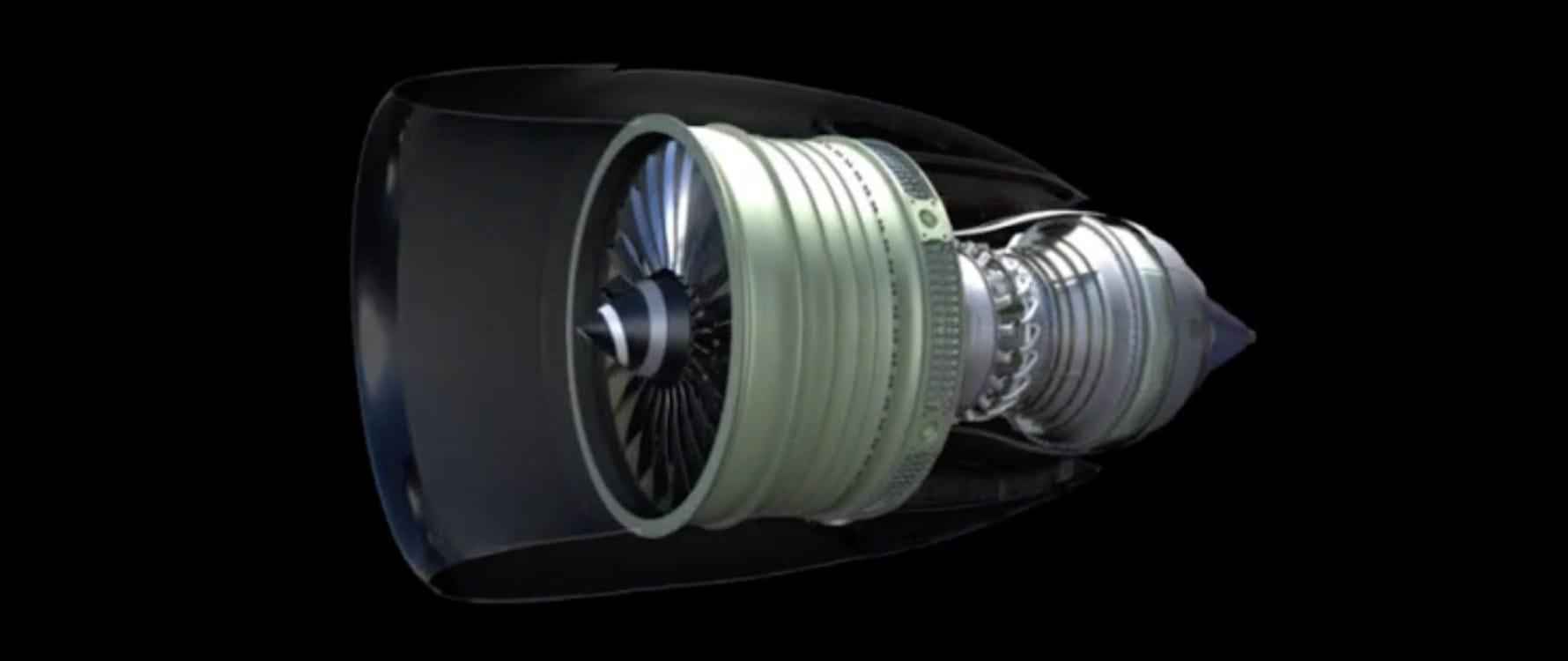
The outside protective shell of a jet engine, traditionally made out of metal. Cowls mainly provide the engine with protection from the elements and with structural support.
Engineered Core
The forming, shaping, machining or bonding of sheets or blocks of honeycomb into profiled and complex shapes for use as semi-finished components in the fabrication of composite parts and structures.
Engineered Products
Completed composite components that typically are manufactured from prepregs, honeycomb, adhesives and assembled hardware. These parts are ready for direct attachment to a structure (e.g., aircraft) or to sub-assemblies. Emerging manufacturing processes allow the fabrication of engineered products directly from reinforcing fibers/fabrics and matrix resins.
Fairing
A secondary structure of an airplane providing enhanced aerodynamics. Typically, fairings are found where the wing meets the body or at various locations on the leading or trailing edge of the wing.
Fiberglass
Filaments made by drawing molten glass. Woven by Hexcel into fabrics and commonly used as a composite reinforcement.
Filament Winding
A process to manufacture composite materials components such as rocket casings and cylinders. Fiber filaments are impregnated in a resin matrix and then wound in a predetermined pattern over a form of the desired component.
Honeycomb
A unique, lightweight, cellular structure made from either metallic sheet materials or non-metallic materials (e.g., resin-impregnated paper or woven fabric) and formed into hexagonal nested cells, similar in appearance to a cross-section of beehive.
Inlet Ducts
Intake passages or tubes that confine and conduct air. They are usually located at the upstream end of an airplane engine on the engine cowling and aid in propulsion and engine cooling.
Interiors
Finished internal aircraft components, such as overhead stowage compartments, lavatories, sidewalls, floor panels and ceilings.
KevlarTM
An aramid fiber from DuPont. Woven Kevlar™ fabrics are used in both ballistic and composite materials applications.
Modulus of Elasticity
The physical measurement of stiffness in a material. A high modulus indicates a stiff material.
Nacelle
The protective shell of a jet engine housed within the cowling, usually made from honeycomb. Provides noise absorption, insulation, structural support and can aid heat dissipation.
NomexTM
DuPont’s registered trade name for its high temperature resistant aramid papers, pressboard, staple fibers and filament yarns. Nomex™ aramid paper is used in the manufacture of honeycomb.
PAN (Polyacrylonitrile)
A polymer which when spun into fiber is used as a precursor material in the manufacture of certain carbon fibers.
Precursor
The PAN, rayon or pitch fibers from which carbon or graphite fibers are derived.
Prepreg (pre-impregnated)
A composite material made from combining high performance reinforcement fibers or fabrics with a thermoset or thermoplastic resin matrix. When cured under high temperature and pressure, exceptional structural properties are achieved.
Primary Structure
A critical load-bearing structure on an aircraft. If this structure is severely damaged, the aircraft cannot fly.
Radome
The housing which protects the aircraft radar system from the elements while allowing transmission of radar signals. Often the radome is in the nose of an aircraft but can be found at other locations on the aircraft, as well.
Reinforcement
A strong material which when combined with a resin matrix forms a composite material. Reinforcements are usually continuous fibers, which may be woven. Fiberglass, aramid and carbon fibers are typical reinforcements.
Reinforcement Fabrics
Woven fiberglass, carbon or aramid fabrics used in production of prepregs and honeycomb.
Resin Matrix
In reinforced fiber composites, a formulated polymeric substrate.
Sandwich Panels
A stiff and lightweight panel consisting of thin sheets such as aluminum or cured prepreg laminate bonded to a low density, rigid core material (e.g., foam or honeycomb).
Structures
Finished components for aircraft and industrial applications. For aircraft, these may be for primary or secondary external structures. Truck applications include chassis fairings and floors.
Videos on Materials, Manufacturing, and Application
Explore short videos that show how Hexcel materials are created, handled, and used in the real world — from cleanroom processing to structural testing.
VIDEO
Hexcel and Archer: Delivering a Safe, Reliable eVTOL Platform to Market
Carbon Fibers are available across a range of strength and stiffness levels. Standard Modulus fiber is approximately 33 Msi in modulus and 650 ksi in tensile strength. IM, or intermediate modulus fiber, has a modulus of 42 Msi and strength of 800 ksi. High modulus fibers are those fibers with modulus above 50 Msi.
Sizings are applied to carbon fiber to help protect the fiber as it is processed by customers. Typically carbon fibers are woven into fabrics, made into prepregs, filament wound or processed in some other fashion. The sizing, usually an epoxy-based material, is applied to help protect the fiber tow from damage. In some cases, fibers can be handled in an unsized form as well.
Carbon Fiber is a reinforcing fiber made from precursor fibers such as PAN (polyacrylonitrile) or Pitch. Carbon Fibers are used in a wide range of applications where strength and stiffness are required and reducing weight is important.
Aerospace Grade fiber is required for the more demanding applications where the fiber properties are tested and then certified to a customer’s specification. Usually, aerospace grade fibers have more traceability as well as higher and more consistent properties. Industrial Grade fibers are certified to the supplier’s specification.
The manufacturing process to be used typically dictates the tow size (or number of filaments in the yarn bundle) to be selected. For weaving fabrics, smaller tow size such as 3K (3000 filaments in the yarn bundle) or 6K might be used. For heavier fabrics, prepreg tapes or filament winding, a larger tow size such as 12K might be preferred.
Composite Materials
Products made by combining two or more dissimilar materials such as fibers and resins to create a product with exceptional structural properties not present in the original materials.
The use of composites was pioneered by the aerospace industry, which sought high performance lightweight alternatives to traditional materials. The benefits were soon adopted by ground transportation industries (marine, rail and automotive) and for sports goods.
Composites are used in place of conventional materials such as metal and wood to achieve sophisticated designs with weight savings and other performance advantages. Although composites are often used to replace metal or wood in existing designs, the maximum benefits are obtained in components that have been designed for composites.
Honeycomb
Honeycomb is a lightweight core material, available in a wide range of materials and cell configurations, supplied by Hexcel in sheet form, in blocks for expansion by the customer or as special process components.
The forming, shaping, machining or bonding of sheets or blocks of honeycomb into profiled and complex shapes, for use as semi-finished components in the fabrication of composite parts and structures. Hexcel supplies customers with high quality components with precise dimensional tolerances which eliminate subsequent manufacturing stages and processes.
Hexcel has manufactured honeycomb for over 50 years and offers the widest range of materials and configurations in the industry. Please refer to our Honeycomb Section to find our offered products and the associated data for those products.
Hexcel has a number of distributors worldwide for small quantities of honeycomb. Please contact customer service for details.
Hexcel manufactures honeycomb in Casa Grande, Arizona, U.S.A. and Duxford, U.K.
Honeycomb prices range from $1 to $500 per board foot, depending on the performance required including strength, stiffness and temperature.
Honeycomb is supplied expanded in sheet form for all product lines, in HOBE slice form (Honeycomb before Expansion) for our Aluminum product lines, or in block form for expansion by the customer.
Please contact your local customer service center. It helps us to process your order more quickly if the following information is supplied:
Material type
Specification
Cell size
Sheet size (length, width, thickness)
Quantity
For more information on honeycomb selection please consult the Hexcel Honeycomb Attributes and Properties manual.
Please state: – Core material, eg. Aluminum with grade 5052, 5056; Aramid paper/Nomex (from DuPont); glass, etc.
Cell size
Required density
Any special requirements, eg.:
Perforated (aluminum only)
Unexpanded (HOBE) – aluminum only
Dimensional tolerances
Application
Specification
Dimensions required: Length* x Width x Thickness
* always in the ribbon direction, ie. parallel to the flow of the material. Please note we may offer our nearest standard honeycomb sheet size to meet your size requirements.
Additional Information
When requesting a quotation please provide a contact name, telephone number and e-mail address in case additional information is required. If appropriate, please state the full material control specification, otherwise our offer will be based on releasing to our In-House standard.
Also advise:
Invoice and delivery addresses
Required delivery date and quantity for the order, or first drop.
Total annual quantity and duration.
Quantity per order with, if applicable, scheduled drops.
Prepregs
Selection is governed by the achievable cure temperature and the maximum service temperature of the component. Consult the prepreg selector guide and Hexcel’s Technical Support department for advice on prepreg selection.
Please note that Hexcel’s lowest temperature curing prepregs are currently HexPly® M34 and HexPly® M79 for industrial applications.
Please contact your local Customer Service center. It would help us to process your order more quickly if you supplied the following information:
Designation
Quantity
Width
Specifications
Prepregs are used for a wide range of applications requiring high strength and stiffness combined with low weight. The use of prepreg was pioneered by the aerospace industry, closely followed by developments for sports goods, performance boats, F1 and Indy cars. Recent innovations have included train bogies and wind turbine blades.
Please provide:
Product designation
Selected matrix (from selector guide or data sheet)
Resin content
Reinforcement type (for example, aramid, glass, carbon, hybrid)
State if reinforcement is woven or unidirectional
For woven reinforcements, advise weave style, fabric weight and grade of fiber
For unidirectional reinforcements, advise fiber weight or cured thickness
We will advise on standard roll size and product width.Additional InformationWhen requesting a quotation please provide a contact name, telephone number and e-mail address in case additional information is required. If appropriate, please state the full material control specification, otherwise our offer will be based on releasing to our in-house standard. Also advise:
Invoice and delivery addresses
Required delivery date and quantity for the order, or first drop
Total annual quantity and duration
Quantity per order with, if applicable, scheduled drops
A composite material made from combining high performance reinforcement fibers or fabrics with a thermoset or thermoplastic resin matrix. When cured under high temperature and pressure, exceptional structural properties are achieved.
Minimum order quantities vary according to product type. For small orders we recommend that you contact your local Hexcel Official Distributor.
Hexcel prepregs are based on four main matrix types: epoxy, phenolic, bismaleimide and cyanate ester. Reinforcements include carbon, glass, aramid and hybrid fibers in both woven and unidirectional form.
Adhesives
A thermoset resin (for example, epoxy, BMI) that is supplied in film form, and cured under heat and pressure to bond a wide range of composite, metallic and honeycomb surfaces. Hexcel markets its film adhesives under the HexBondTM trademark.
These high performance structural adhesives are ideal for metal to metal and composite bonding, and for the manufacture of honeycomb sandwich structures. They are excellent for covering large surfaces with an even layer of adhesive providing assurance of complete surface coverage. They are easy to handle and postion, clean to use without spillage and safe. Hot melt adhesive films do not contain solvents and have generally very low odour. Curing is controlled by the heating process allowing the adhesives to be laid and postioned in one location and time and cured in another.
Film adhesives are supplied in roll form. They come in different film thicknesses which are defined by their areal weight. The films are heat sensitive and when not in immediate use should always be stored in a freezer, usually at -18°C. Before use they must be removed from freezer and allowed to acclimatise to room temperature without opening the packaging so as to avoid condensation. The film is laid out on a suitable cutting table and cut to shape before removal of the polythene cover.
Product selection depends on the density requirement and the properties required from the foam (e.g. insulation, ski cores). See Selector Guide.
Modipur polyurethanes are the result of a reaction of combining two-component thermoset systems. Usually processed in a match-mould set-up, PUR is supplied in drums of 210kg, 1 ton containers or bulk transport. For the Component 2 (Isocyanate) Hexcel uses MDI and HDI and variations rather than TDI or IPDI Isocyanates.
The cost is dependent on the specific requirements for the formulation and the required additives as well as the overall quantity considered. Please contact Customer Service for information.
When requesting a quotation please provide a contact name, telephone number and e-mail address in case additional information is required. If appropriate, please state the full material control specification, otherwise our offer will be based on releasing to our in-house standard. Also advise:
Invoice and delivery addresses
Required delivery date and quantity for the order, or first drop
Total annual quantity and duration
Quantity per order with, if applicable, scheduled drops
Minimum package size is 210kg for the Polyole (Component 1) and 250 kg for the Isocyanate (Component 2). For sample purposes smaller quantities may be arranged.
Hexcel offers mainly 2 component PUR systems as rigid or integral foams for the ski-and snowboard industry; a PUR system for Wet Lay Up Process and rigid and semiflexible systems for industrial applications.
PUR systems offer cost saving advantages for high performance components production. In the recreation industry the properties of the material enable complex shapes to be achieved at low curing temperatures in short cycles.
Laminates can be supplied in rolls, cut rolls and sheets.
Skis, snowboards, X-country skis, ice hockey shafts, industrial applications (e.g. skins for sandwich panels), automotive.
Hexcel’s Polyspeed laminates are epoxy or phenolic impregnated reinforced materials, in which the matrix is already cured.
When requesting a quotation please provide a contact name, telephone number and e-mail address in case additional information is required. If appropriate, please state the full material control specification, otherwise our offer will be based on releasing to our in-house standard. Also advise:
Invoice and delivery addresses
Required delivery date and quantity for the order, or first drop
Total annual quantity and duration
Quantity per order with, if applicable, scheduled drops
Unpressed laminates – woven reinforcements only Pressed laminates – woven and UD material for high performance. See product selector for Polyspeed laminates.
Hexcel manufactures laminates at its plant in Neumarkt, Austria